120 Hours Bail Bonds Course Florida: Requirements, Attendance & Licensing Steps

If you are preparing to become a bail bond agent in Florida, the 120 Hours Bail Bonds Course Florida is one of the most important parts of the licensing process. But prospective students often have questions beyond simply where to enroll. What is the purpose of the course? What score is required? How much class can you miss? Is the course available online? What happens after graduation?

Understanding those details before registering can make the licensing process much easier.

For most people entering Florida’s commercial surety bail bond profession, the goal is the 2-34 Limited Surety Bail Bond Agent license. Florida law requires qualifying applicants to complete at least 120 hours of approved classroom instruction with a grade of at least 80 percent, along with a separate approved correspondence course. The education must generally be completed within the two years immediately before applying for the license.

Students interested in beginning the process can view upcoming Florida bail bond classes through Bail Bonds Education Center / Optimal Bail Bonds.


1792708503999/image_0_a88a8676-5a65-453f-9bfa-009f83ca194d.jpeg

Overview & Requirements: Course Purpose, Passing Score and Attendance

  • The purpose of the 120-hour course is to provide the pre-licensing education future Florida bail bond agents need before moving through the state licensing process. Students study areas such as Florida bail law, the criminal justice system, surety relationships, contracts, underwriting, collateral, forfeitures, records, licensing, appointments, and professional conduct.

    The Florida license class most students are preparing for is 2-34 Limited Surety Bail Bond Agent. DFS identifies the 2-34 license as the resident limited surety bail bond credential for an individual appointed by an insurer to execute or countersign bail bonds.

    Students should distinguish the license number from the education provider and individual class-offering numbers. Bail Bonds Education Center / Optimal Bail Bonds currently lists Provider #373447. Its course page displays individual class-offering numbers for particular sessions; for example, the current live webinar listing shows Class Offering #1245542, while the self-study correspondence listing shows #1242242. Because offering numbers can change from one class session to another, students should verify the current number when registering rather than treating an offering number as a permanent course code.

    What Score Is Required?

    Students must earn at least 80 percent in the qualifying bail bond pre-licensing course.

    Florida Statute 648.34 expressly requires a passing grade of 80 percent or higher, and Florida’s pre-licensing administrative rule similarly requires an 80 percent minimum for satisfactory completion of a bail bond agent course.

    The state licensing examination is a separate examination. Florida law authorizes DFS to establish the minimum performance level required to pass that examination.

    What Other Education Is Required?

    The 120-hour classroom course is not the only education requirement.

    Florida also requires applicants to successfully complete an approved correspondence course for bail bond agents. Both educational components generally must be completed within the applicable two-year period before licensure.

    Students therefore should not assume that graduating from the live 120-hour course means all pre-licensing education has been completed.

    What Are the Attendance Rules?

    Attendance matters because this is a classroom-based pre-licensing program.

    Bail Bonds Education Center / Optimal Bail Bonds currently states that its program requires at least 80 percent attendance. For its 120-hour program, that means students may miss no more than 24 hours. According to the published course policy, exceeding that absence limit results in removal from the course and requires the student to enroll in and complete the program again.

    The course is also described as a live program requiring students to remain actively engaged while instruction is taking place.

    Students should treat the webinar like an actual classroom. Logging into Zoom is not the same as actively attending class. The goal is to participate, follow the instructor, complete assignments, and remain engaged with the material.

  • 1792708535869/image_0_8a4dc49f-e01a-4995-9c59-b0d83be646ba.jpeg

    Approved Provider & Formats: Bail Bonds Education Center / Optimal Bail Bonds

    Students researching the course may see the names Bail Bonds Education Center and Optimal Bail Bonds used together. The sflbailbonds.com website provides both bail bond services through Optimal Bail Bonds and educational services through its Bail Bonds Education Center.

    For prospective students, the education path should be kept separate from the emergency bail-service path. Someone who wants to become an agent should go directly to the education resources and view upcoming Florida bail bond classes.

    The current pre-licensing page identifies Provider #373447 and offers two different learning formats.

    The 120 Hours Bail Bonds Course is offered as a live webinar. Students participate in real-time online instruction rather than working entirely through prerecorded material. Florida law permits classroom instruction to be delivered by a live instructor through lecture, video, webcast, virtual, or other audiovisual presentation.

    The correspondence course is different. It is offered as online self-study and is completed independently.

    This distinction matters.

    The live webinar gives students the ability to hear explanations and ask questions while topics such as contracts, forfeitures, underwriting, and collateral are being taught. The correspondence course gives students another way to work through required material independently.

    Students should complete both requirements rather than treating the self-study correspondence course as a replacement for the 120-hour live classroom requirement.

    For more background on the education process, read Florida’s 120-Hour Pre-Licensing Bail Bond Course: Your First Big Step.

    1792708565190/image_0_febe40ab-52a1-498f-9ac2-3bf1e38b742f.jpeg

    Next Steps: State Application, Fingerprinting and References

  • Completing the coursework is a major milestone, but it does not automatically create a Florida bail bond license.

    The next phase is the state licensing process.

    The Florida Department of Financial Services currently instructs applicants for the 2-34 license to complete the online application and applicable fees. Applicants must also satisfy Florida’s basic qualification requirements, including being at least 18 years old, holding a high school diploma or equivalent, satisfying Florida residency and work-authorization requirements, and meeting the state’s character and integrity standards.

    Fingerprinting

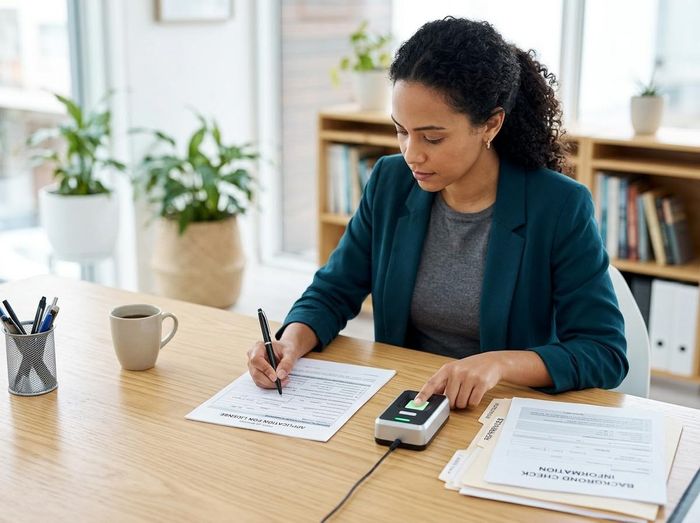
    Applicants must also be fingerprinted.

    Florida law requires a complete set of fingerprints, and DFS may not issue the license until it receives the applicable criminal-history reports from the Florida Department of Law Enforcement and Federal Bureau of Investigation.

    Fingerprinting is therefore part of the state licensing process—not simply something a school does when the student enters class.

    References or Endorsements

    Florida also requires applicants to submit recommendations from at least three reputable citizens.

    Section 648.34 requires sworn statements from at least three reputable citizens who reside in the same counties where the applicant proposes to engage in the bail bond business.

    DFS’s current licensing guide describes these as three notarized statements. It also calls for a recent credential-sized, full-face photograph as part of the application requirements.

    These requirements are easy to overlook when students concentrate only on the classroom and examination, which is why it helps to understand the complete licensing path early.

  • 1792708600959/image_0_90fab885-951c-4b44-9d1d-b28d552048c7.jpeg

    Temporary License & State Examination: An Important 2026 Update

    This area requires special attention because a large amount of older information online is now outdated.

    Florida does not issue new temporary bail bond agent licenses.

    Effective July 1, 2023, DFS was prohibited from issuing new temporary bail bond agent licenses. Florida law further provides that a temporary bail bond agent license is no longer valid on or after June 30, 2025.

    Therefore, a student completing the 120-hour course in 2026 should not plan on obtaining a temporary bail bond agent license before taking the state examination.

    That former pathway is obsolete.

    Current applicants should follow the modern licensing sequence: complete the required education, submit the state application and supporting requirements, complete fingerprinting and background review, receive examination authorization, and pass the required licensing examination.

    Florida Statute 648.38 states that after DFS approves the licensure application, the applicant must appear in person for the written examination administered by the Department or its designated testing provider.

    Pearson VUE currently administers Florida bail bond licensing testing. Its published content outline for the Limited Surety examination identifies 60 scored questions plus 10 pretest questions, with a 75-minute examination time.

    Students should also know what happens after repeated examination failure. If an applicant fails the bail bond examination three times, Florida law requires that person to retake the 120-hour course and again earn at least 80 percent before another examination attempt.

    For additional preparation, students can review Mastering the 120-Hour Pre-Licensing Class for Aspiring Bail Bondsmen.

    Frequently Asked Questions

    What is the Florida bail bond license called?

    Most students entering commercial surety bail are preparing for the 2-34 Limited Surety Bail Bond Agent license.

    Is 2-34 the course code?

    No. 2-34 is the Florida license class, not the individual class-offering number. Bail Bonds Education Center currently lists Provider #373447, while offering IDs can change based on the specific class session.

    What score do I need to pass the 120-hour course?

    You must earn at least 80 percent.

    Can I miss some of the live course?

    Bail Bonds Education Center / Optimal Bail Bonds currently publishes an 80 percent attendance requirement, allowing no more than 24 hours of absence from its 120-hour program. Students exceeding the stated limit must repeat the program.

    Is the 120-hour course available online?

    Yes. The program is offered through live webinar instruction. Florida law recognizes live virtual or webcast instruction as a permissible classroom format when the course otherwise satisfies applicable requirements.

    Do I also need the correspondence course?

    Yes. The correspondence course is a separate pre-licensing requirement.

    Do I need references?

    Yes. Florida requires sworn recommendations from at least three reputable citizens meeting the statutory county-residency requirements.

    Are fingerprints required?

    Yes. Fingerprinting and criminal-history review are part of the licensing process.

    Do I get a temporary bail bond license first?

    No. Florida no longer issues new temporary bail bond agent licenses, and temporary licenses became invalid after June 30, 2025.

    Do I have to take a state examination?

    Yes. The applicant must pass the required examination after receiving authorization through the licensing process.

    Where can I register for the course?

    Prospective students can view upcoming Florida bail bond classes for the current webinar format, tuition, class offering, schedule, and registration information.

    Understand the Full Path Before You Enroll

    The 120 Hours Bail Bonds Course Florida is one of the central steps toward becoming a licensed bail bond agent, but the classroom is only part of the process.

    Students need to earn at least 80 percent, satisfy attendance requirements, complete the separate correspondence education, submit the Florida licensing application, complete fingerprinting and background requirements, provide the required recommendations, receive examination authorization, and pass the state licensing examination.

    Just as important, new students should avoid following outdated information about temporary bail bond licenses. That pathway has ended for new applicants.

    The best approach is to begin with current information and follow each step in order.

    Prospective students can view upcoming Florida bail bond classes, read Become a Bail Bondsman: Start With the 120-Hour Course.