1791889475806/image_0_b760f652-70c7-4ebb-b15b-251a9d0180e2.jpeg

120 Hours Bail Bonds Course in Florida: A Deep Research Guide to Pre-Licensing, the State Exam, and Becoming a Bail Bond Agent

Anyone researching how to become a bail bond agent in Florida will quickly discover that the 120 Hours Bail Bonds Course is one of the most important steps in the licensing process. It is not simply an introductory class and it is not just an exam-prep workshop. Florida uses the course as part of the formal pre-licensing pathway for prospective bail bond agents, and the material is intended to prepare students for both the state licensing examination and the real responsibilities that come after licensure.

The course introduces students to a profession that combines criminal justice, insurance, contracts, surety law, underwriting, court procedure, financial responsibility, and regulatory compliance. A licensed Florida bail bond agent may eventually handle premium payments, collateral, indemnity agreements, powers of attorney, forfeitures, court notices, insurer relationships, recordkeeping, and bonds involving substantial financial exposure. That is why the state does not treat bail bond licensing like a simple registration process.

For students considering this career, the most important thing to understand is that the 120 Hours Bail Bonds Course is a foundation. Completing the course does not automatically produce a license, and passing the course does not eliminate the need to satisfy other Florida Department of Financial Services requirements. A prospective agent must still meet the state’s eligibility standards, complete the required correspondence education, submit the appropriate application, satisfy fingerprint and background requirements, pass the state examination, and obtain the appropriate appointment before legally acting as a bail bond agent.

Students who are ready to explore the educational process can begin with the 120 Hours Bail Bonds Course offered through Everything Bail Bonds.

Why Florida Requires 120 Hours of Bail Bond Education

he 120-hour requirement comes from Florida’s statutory licensing framework. Florida law requires qualifying applicants to complete at least 120 hours of classroom instruction in a basic certification course related to the criminal justice system and to earn a grade of at least 80 percent. The course generally must be completed within the two years immediately before the applicant seeks the license.

That requirement tells prospective students something important about the profession. Florida does not view bail bonding as a job that can be learned solely by observing another agent at work. The state expects applicants to receive structured education before they take on legal and financial responsibility for defendants, indemnitors, collateral, and surety obligations.

The reason becomes clear when looking at the kinds of decisions an agent may eventually make. A bail bond agent may have to evaluate whether a defendant presents an acceptable risk, determine what underwriting information is needed, explain an indemnity agreement to a cosigner, decide whether collateral is appropriate, monitor court appearances, respond to a forfeiture, maintain records for regulatory review, and operate within strict rules governing solicitation, premium collection, advertising, and insurer appointments.

A mistake in any one of those areas can have serious consequences. A missed deadline can create financial exposure. Mishandling collateral can create regulatory problems. Improper solicitation can place a license at risk. Poor recordkeeping can make it difficult to defend an agency during an examination or dispute.

This is why the 120-hour requirement should be viewed as professional preparation rather than a bureaucratic hurdle. Students who want a broader introduction to that idea can also read Florida’s 120-Hour Pre-Licensing Bail Bond Course: Your First Big Step.

What License Does the 120-Hour Course Prepare You For?

Most people searching for information about becoming a bail bondsman in Florida are preparing for the 2-34 Limited Surety Bail Bond Agent license. This is the license commonly associated with commercial bail bond work involving surety bonds.

A limited surety bail bond agent operates through a relationship with an insurer and uses authority granted through appointment and power of attorney. That means the agent is not simply an independent individual deciding to post bonds. The agent functions within a regulated insurance structure and must have the proper license and appointment.

This distinction is important because students sometimes assume that completing the 120-hour course means they can immediately begin writing bonds. That is not how the process works.

The 120-hour course satisfies an educational requirement. The state examination evaluates the applicant’s knowledge. The Department determines whether the applicant qualifies for licensure. Then an appointment is needed for the agent to act with the insurer’s authority.

In other words, education, licensure, and appointment are related but separate concepts.

Understanding that distinction early helps students avoid confusion later. It also helps them understand why Florida Chapter 648 spends so much time discussing licensing, appointment, insurer relationships, managing general agents, and authority to execute bail bonds.

For students who want a more career-focused explanation of the process, Become a Bail Bondsman: Start With the 120-Hour Course provides another useful overview.

Who Should Consider Taking the 120 Hours Bail Bonds Course?

The course is designed for individuals who want to pursue the Florida bail bond profession and who meet the state’s basic qualification requirements.

Prospective applicants should review those requirements before enrolling. Florida’s licensing process includes age, education, residency, work authorization, character, and business-location requirements. The applicant must be at least 18 years old, hold a high school diploma or equivalent, and satisfy the residency and legal-work requirements established by Florida law.

Character and integrity are also part of the licensing process. This is especially important because bail bond agents handle money, collateral, contractual obligations, and legal documents. The state evaluates more than whether the applicant can pass a classroom test.

There are also occupational conflicts and restrictions that may affect eligibility. Certain law enforcement, corrections, court, legal, or custodial roles can create disqualifications or conflicts under Florida law.

That means a person considering the profession should not wait until the end of the 120-hour course to ask whether they are eligible.

The smartest approach is to review the current Florida Department of Financial Services requirements first, then begin the educational process with a clear understanding of the overall licensing pathway.

The 120-Hour Course Must Meet Florida Approval Requirements

One of the most important things prospective students should understand is that not every class advertised online as “bail bond training” necessarily satisfies Florida’s pre-licensing requirement.

Florida regulates pre-licensing schools, curricula, instructors, and course offerings.

That means a student should verify that the school and course are intended to satisfy the Florida 120-hour requirement before enrolling. A private seminar, a generic online video course, a study guide, or a non-approved class may provide useful information but may not satisfy the state’s licensing requirement.

The purpose of the approval process is to create a minimum standard for what future bail bond agents should learn.

A properly structured pre-licensing course should cover more than surface-level definitions. It should teach students how Florida law regulates the profession, how bail bonds function as surety obligations, how court procedures affect the agent, and how legal and financial responsibilities continue after a bond is written.

Students can review the primary program information on the 120 Hours Pre License Bail Bonds Course page.

Can the 120 Hours Bail Bonds Course Be Taken Online?

Yes, provided the course meets Florida’s current requirements for classroom instruction.

This is an important point because the phrase “classroom instruction” can sound as though students must physically attend a school building. Florida law, however, allows live instructor-led education to be delivered through virtual and audiovisual methods.

That makes live online instruction possible.

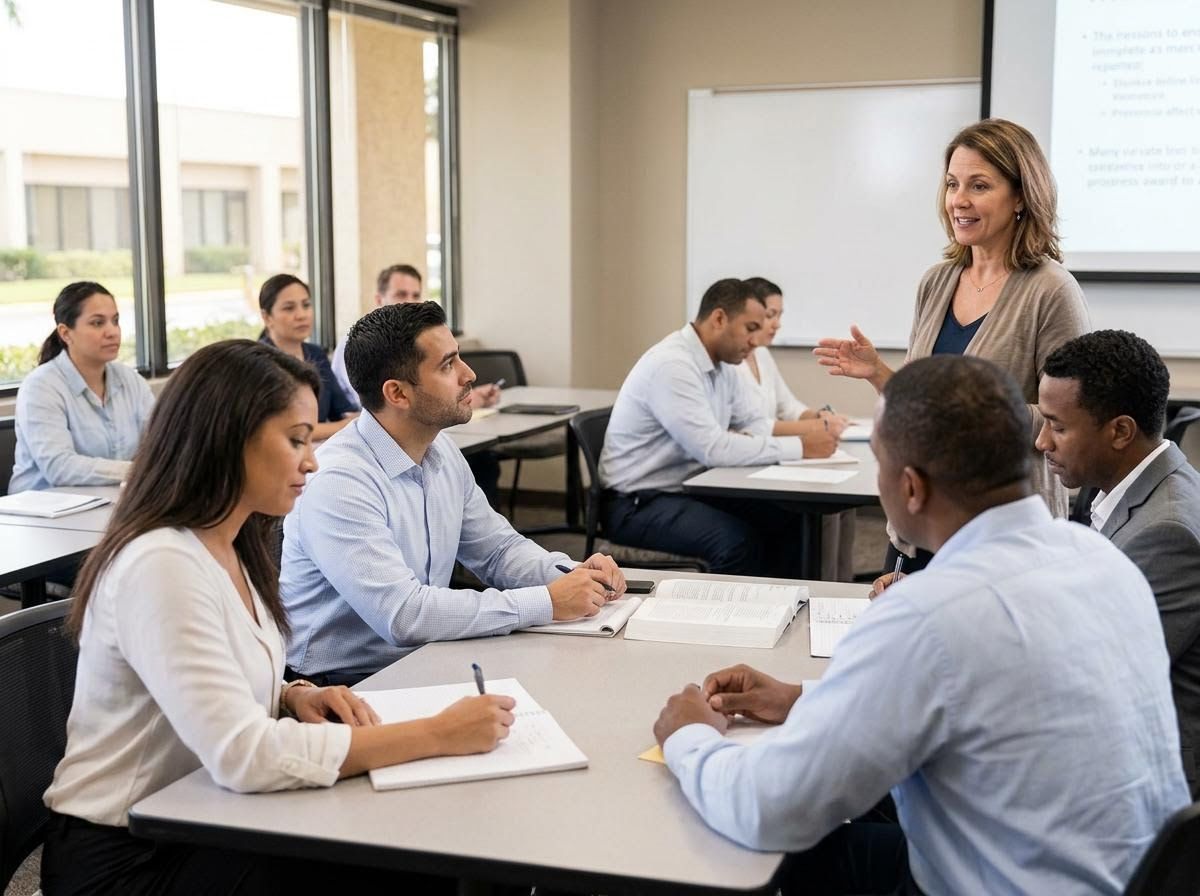
Everything Bail Bonds offers the 120-hour instruction through live online Zoom classes. The key feature is that the course remains instructor-led rather than purely self-paced.

That live structure can be valuable for students because bail law contains many concepts that look similar on paper but operate differently in practice. A student may understand the definition of collateral but still have questions about how collateral relates to indemnity. A student may memorize a forfeiture rule but still struggle to understand what an agent should do when a notice arrives. A student may know what an appointment is but confuse it with the license itself.

Live instruction gives students the opportunity to ask questions, work through examples, and hear explanations in context.

That can be especially helpful in a subject that combines statutory rules, legal terminology, contracts, and practical business decisions.

The 120-Hour Course and the Correspondence Course Are Different Requirements

One of the most common sources of confusion is the difference between the 120-hour classroom course and the correspondence course.

Florida requires both.

The 120-hour course is the instructor-led pre-licensing component. The correspondence course is a separate educational requirement and is typically completed in a self-paced format.

Everything Bail Bonds offers a correspondence course that is completed online and includes assignments after sections of the course. That is a different learning experience from the live Zoom-based 120-hour program.

Students should not assume that completing one automatically satisfies the other.

This distinction matters because the state uses the two requirements to expose students to the material in different ways. Live instruction allows explanation and discussion. Correspondence work requires the student to read, review, and complete assignments independently.

Together, they create a more complete educational foundation.

A student who understands this from the beginning is less likely to reach the end of the 120-hour course and then discover that another required educational step remains.

What Students Should Learn in the 120 Hours Bail Bonds Course

A serious 120-hour course should help students understand the profession as a complete system.

One major area is Florida Chapter 648, which governs bail bond agents and agencies. Students need to understand licensing, appointments, insurer relationships, rates, records, continuing education, collateral, prohibited conduct, disciplinary authority, advertising, agency operations, and the regulatory powers of the Department.

Another major area is Florida Chapter 903, which deals more directly with bail procedure. Students may encounter subjects such as execution of bail, surety obligations, surrender, forfeiture, judgment, discharge, remission, and cancellation.

The strongest education connects these chapters rather than teaching them as isolated blocks.

Chapter 648 helps explain who may act as a bail bond agent and how the business must be operated. Chapter 903 helps explain what happens to the bond as it moves through the criminal justice system.

A future agent needs both perspectives.

Students can explore that relationship further in How to Be a Bail Bondsman in Florida: Understanding Florida Statutes 648 and Chapter 903.

Understanding Bail as a Surety Obligation

One of the foundational concepts in the course is suretyship.

A bail bond is not simply a payment receipt and the agent is not merely processing paperwork. When a surety bond is written, the surety becomes financially responsible for the bond obligation under the terms established by law.

That means the agent must think in terms of risk.

The defendant’s obligation to appear in court matters because the surety may face financial exposure if the defendant fails to appear and the bond is forfeited.

This is why underwriting exists.

An agent needs to evaluate whether the defendant appears likely to comply with the bond, whether the indemnitor can support the obligation, whether collateral is appropriate, and whether the overall risk is acceptable.

Once students understand suretyship, many other topics begin to make more sense. Premiums are connected to the surety service. Collateral helps secure the risk. Indemnity shifts certain responsibilities to the cosigner. Forfeiture represents the financial consequence of a failed obligation.

Without that foundation, students may memorize individual rules but fail to understand how they fit together.

Contracts Are a Major Part of Bail Bond Practice

Contracts are another core subject in the 120-hour course.

A bail bond office deals with agreements every day. There may be indemnity agreements, collateral agreements, premium arrangements, powers of attorney, agency agreements, and other contractual documents.

Students therefore need to understand basic contract principles such as offer, acceptance, consideration, mutual agreement, legality, and contractual responsibility.

These concepts are not merely academic.

Imagine an indemnitor signing an agreement without understanding the financial obligations. Imagine collateral being accepted without clear documentation. Imagine an agent explaining a contract incorrectly to a customer.

Those situations can create disputes and regulatory problems.

A professional bail bond agent should understand what the documents mean and why they matter.

Students who want a deeper explanation of the importance of professional education can also review Why the 120-Hour Bail Bond Course Is Essential for Your Career.

Underwriting Is More Than Asking Questions

Underwriting is one of the most practical skills students should begin developing during the course.

A bail bond agent may review the defendant’s residence, employment, family ties, court history, criminal history, travel, financial circumstances, and other information that helps assess the risk of the bond.

The indemnitor may also become part of the underwriting analysis.

A weak educational approach teaches students only which questions to ask.

A stronger approach teaches why the answers matter.

For example, stable residence can help an agent understand whether the defendant has strong local ties. Employment can provide information about financial stability and community connection. Prior failures to appear may raise concerns about future compliance. Strong indemnitors or collateral may help reduce financial risk.

The goal is not to make assumptions about guilt or innocence.

The goal is to evaluate the likelihood that the defendant will fulfill the bond obligation.

That is the essence of underwriting.

Premiums and Collateral Must Be Understood Separately

Future agents also need a clear understanding of the financial side of bail.

The premium is the charge associated with the surety bond service. It is not the same thing as the face amount of the bond and it is not the same thing as collateral.

Students should avoid relying on old rules of thumb or outdated statements about bail bond percentages. Florida regulates bail bond rates and the approved filed rate controls.

Collateral is different.

Collateral is security held to protect the surety against potential lawful loss. Depending on the bond and underwriting circumstances, collateral may or may not be required.

Students need to understand how collateral should be documented, how it must be safeguarded, and how its return relates to the termination of surety liability.

This is where professional responsibility becomes especially important.

An agent may be handling someone else’s property or money. That creates legal, ethical, and regulatory obligations.

The course should therefore teach collateral as a serious fiduciary responsibility rather than simply a tool for reducing risk.

Forfeitures and Judgments Are Among the Most Technical Topics

Forfeiture is one of the areas where a student’s understanding can have major financial consequences later.

When a defendant fails to appear, the bond may be forfeited under Florida law.

At that point, deadlines matter.

The agent and surety may need to evaluate the notice, determine whether grounds for discharge exist, locate the defendant when appropriate, and take timely action before the forfeiture progresses further.

If the situation is not resolved, the matter can eventually proceed toward judgment.

This is why students should understand forfeiture as a process rather than a single event.

The notice is not something to file away and revisit later.

A professional bail bond office should have procedures for monitoring court activity, reviewing notices, and responding quickly.

Students who become comfortable with these concepts during the 120-hour course are better prepared for the state exam and for actual agency work.

Records and Documentation Matter More Than Many Students Expect

Recordkeeping is another important part of professional bail bond practice.

Agents may be required to maintain information about bonds executed, premium payments, powers of attorney, collateral, defendants, indemnitors, forfeitures, and other transactions.

Students sometimes view this as a less exciting topic compared with arrests, release, and underwriting.

In practice, records can be critical.

A good file helps demonstrate what happened, what was agreed to, what money was collected, what collateral was accepted, and what action the agency took.

Records also become important during regulatory examinations, customer disputes, insurer reviews, and legal proceedings.

Professional agents learn quickly that the paperwork is part of the bond, not separate from it.

Prohibited Conduct Can End a Career Quickly

The course should also give students a strong understanding of prohibited conduct.

Florida regulates solicitation, advertising, payments, relationships with detention facilities, financial transactions, and other areas of bail bond practice.

A new agent who does not understand those rules can create serious problems almost immediately.

This is why ethics and compliance should not be treated as minor exam topics.

They are career-protection topics.

A person can be talented at sales, customer service, and underwriting and still jeopardize a license by violating a solicitation rule or mishandling money.

The stronger the educational foundation, the more likely the agent is to recognize situations that should be avoided.

Why Scenario-Based Learning Is So Important

One of the best ways to learn bail bond law is through realistic scenarios.

Memorization has value, particularly when preparing for a licensing examination, but professional practice is rarely presented as a multiple-choice definition.

An agent may face a situation involving a defendant, indemnitor, collateral, missed court date, forfeiture notice, and insurer obligation all at once.

That requires the agent to connect several areas of knowledge.

Consider a defendant who misses court after a family member has provided collateral. The agent now needs to think about forfeiture, indemnity, collateral, court procedure, surety liability, records, and deadlines.

That is why scenario-based education is so useful.

It teaches the student how to apply the law rather than simply repeat it.

Students looking for additional preparation resources can also read Mastering the 120-Hour Pre-Licensing Class for Aspiring Bail Bondsmen.

How the 120-Hour Course Connects to the Florida State Exam

The state examination is the point at which the applicant must demonstrate knowledge of the profession.

The 120-hour course should therefore be treated as part of exam preparation, but it should not be reduced to test-taking alone.

The strongest students understand concepts deeply enough to recognize how similar rules differ.

For example, license is not the same thing as appointment. Premium is not the same thing as collateral. Forfeiture is not the same thing as judgment. Defendant is not the same thing as indemnitor. Surety is not the same thing as bail bond agent.

These distinctions can appear small, but they matter both on the examination and in real practice.

Students should use the course period to review regularly rather than waiting until the end to begin serious exam preparation.

The goal should be to understand the system well enough that exam questions feel familiar because they reflect principles already learned in class.

What Happens if You Fail the Bail Bond Exam Three Times?

Florida law gives applicants opportunities to retake the licensing examination, but repeated failure has an important consequence.

After three examination failures, the applicant must retake the 120-hour course and again earn at least 80 percent before attempting the examination another time.

That rule gives students a strong reason to take the course seriously from the beginning.

Completing 120 hours without mastering the material can become expensive and time-consuming if the student later has to repeat the entire program.

The best strategy is to study consistently, ask questions, review difficult concepts, and use practical scenarios to strengthen understanding.

The course should be viewed as the main learning period, not simply a prerequisite before “real studying” begins.

The Licensing Process Includes More Than Education

Even after completing the course and passing the exam, an applicant still must satisfy the broader licensing requirements.

Florida’s process includes application review, fingerprints, criminal-history review, character evaluation, education verification, examination, licensure, and appointment.

This is why students should be cautious about any advertisement suggesting that completing a course automatically makes someone a Florida bail bond agent.

The course is essential, but it is one step.

The applicant still must be approved through the state’s licensing process.

Older Information About Temporary Bail Bond Licenses Can Be Misleading

Students doing online research may encounter old websites describing a temporary bail bond agent license, an internship, or a one-year temporary licensing period.

That information may be outdated.

Florida stopped issuing new temporary bail bond agent licenses beginning in 2023, and the older temporary-license pathway should not be treated as the current route into the profession.

This is an excellent example of why students should use current Florida Department of Financial Services information and current statutes.

Bail law changes.

Licensing procedures change.

Rules that were correct several years ago may no longer apply today.

A professional agent should develop the habit of checking current law rather than relying only on old study materials.

Why Appointment Still Matters After Licensure

After education, examination, and licensure, the agent still needs the appropriate appointment.

This is one of the most important concepts for new agents to understand.

The state license shows that the person has met the licensing requirements. The appointment connects the agent to the insurer authority needed to act as a bail bond agent.

That means someone can theoretically hold a license but still lack the authority to write certain bail bonds until the required appointment is in place.

Students who want a deeper explanation of this relationship can read Licenses & Appointments 101: Making Sense of Florida Statute 648.27.

Understanding this before graduation helps students see the profession as a regulated insurance relationship rather than simply an individual business license.

Education Continues After the 120 Hours

The 120-hour course is the beginning of professional education, not the end.

Florida requires continuing education for licensed bail bond agents, and the reason is simple: laws, procedures, and regulatory expectations can change.

A responsible agent needs to stay current.

That includes changes to licensing law, appointment rules, education requirements, forfeiture procedures, administrative rules, and Department guidance.

The elimination of the old temporary-license path is a good example.

Someone who learned the profession several years ago and never updated their knowledge could easily give incorrect advice to a new student today.

Professionalism therefore requires continuous learning.

The habits students build during the 120-hour course can become the habits that protect their careers later.

Choosing the Right 120 Hours Bail Bonds Course

Students comparing schools should look beyond convenience alone.

The first question is whether the course is intended to satisfy Florida’s pre-licensing requirement.

The second question is whether the program actually teaches the profession in a way the student can understand.

A strong course should explain Chapters 648 and 903 in plain language, connect statutory rules to practical situations, and cover contracts, suretyship, underwriting, collateral, indemnity, premiums, forfeitures, appointments, records, and prohibited conduct.

Instructor access matters too.

Live instruction gives students a chance to ask questions as difficult concepts arise.

Everything Bail Bonds offers live online Zoom instruction with weekend, part-time evening Monday-through-Thursday, and full-time class options.

Students can review current course information through the 120 Hours Pre License Bail Bonds Course page.

Those still comparing programs may also find Finding the Right Pre-Licensing Bail Bond Class: A Comprehensive Guide useful.

Why Instructor Experience Matters

A statute tells the student what the law says.

An experienced instructor can help explain what that rule looks like when applied to an actual bail bond situation.

That difference can be significant.

For example, underwriting may seem simple in a textbook. The student learns to consider residence, employment, family ties, court history, and other factors.

An experienced instructor can show how those factors interact when the defendant has a high bond amount, limited community ties, an uncertain residence, and an indemnitor who does not fully understand the risk.

The same is true with forfeitures.

A statute may explain the deadline.

An experienced instructor can explain why a professional agency should have a system for monitoring forfeiture notices so they are never forgotten on a desk.

This type of explanation helps turn legal rules into professional judgment.

The Goal Should Be Professional Competence, Not Just Passing

Passing the course matters.

Passing the state examination matters.

But neither should be the final goal.

The real goal is becoming competent enough to handle actual bail bond transactions responsibly.

Once licensed, the decisions become real.

The defendant is real.

The indemnitor’s financial responsibility is real.

The collateral is real.

The premium is real.

The forfeiture deadline is real.

The surety exposure is real.

The Department’s regulatory authority is real.

This is why students should resist the temptation to treat the course as something to rush through.

The most valuable outcome is not merely completing 120 hours.

It is leaving those 120 hours with enough knowledge to understand the profession you are entering.

This broader professional mindset is explored in Become a True Professional in the Bail Bond Industry.

Frequently Asked Questions About the 120 Hours Bail Bonds Course

Is the 120 Hours Bail Bonds Course required in Florida?

Yes. Florida requires qualifying applicants to complete at least 120 hours of classroom instruction and earn a grade of at least 80 percent as part of the licensing process.

Can the 120-hour bail bond course be taken online?

Yes, when the course is delivered in a manner that meets Florida’s current classroom-instruction requirements. Live virtual instruction can qualify when offered through the appropriate approved program.

Is the correspondence course included in the 120 hours?

No. The correspondence course is a separate requirement from the 120-hour instructor-led pre-licensing course.

What grade is required?

Florida requires a minimum grade of 80 percent in the 120-hour course.

How long does the course completion remain usable for licensing?

The 120-hour course generally must be completed within the two years immediately before the applicant seeks licensure.

Does completing the 120-hour course make me a licensed bail bond agent?

No. The course satisfies an educational requirement. Applicants must still satisfy the other licensing qualifications, complete the application and background process, pass the required examination, and obtain the proper appointment.

What happens if I fail the state exam three times?

Florida requires the applicant to retake the 120-hour course and again earn at least 80 percent before attempting the examination again.

Is the old temporary bail bond license still part of the process?

New temporary bail bond agent licenses are no longer issued under the old system. Students should use current DFS information rather than relying on older articles describing the former temporary-license path.

Do I need an appointment after I become licensed?

Yes. A Florida bail bond agent must have the appropriate appointment before acting within the authority of the license and insurer relationship.

Where can I learn more about the course?

Students can begin with the Florida 120 Hours Pre License Bail Bonds Course and continue with Become a Bail Bondsman: Start With the 120-Hour Course.

The 120 Hours Bail Bonds Course Is the Beginning of a Professional Career

The 120 Hours Bail Bonds Course in Florida should be viewed as the educational foundation of a regulated profession.

The course introduces students to a system where criminal justice, insurance, contracts, surety law, court procedure, financial risk, and customer responsibility all intersect.

A serious student should leave the course understanding why a bail bond is a surety obligation, why underwriting matters, why indemnity agreements create responsibilities, why collateral must be handled carefully, why premiums are regulated, why forfeiture deadlines demand immediate attention, why appointments matter, and why Florida closely regulates the conduct of bail bond agents.

That knowledge helps with the state examination.

More importantly, it helps after the examination.

Once an agent becomes licensed and appointed, the situations are no longer classroom hypotheticals. They involve real defendants, real families, real money, real contractual obligations, and real court deadlines.

That is why the best question to ask before enrolling is not simply, “How quickly can I finish the 120 hours?”

The better question is, “How much can I learn during those 120 hours that will help me become a knowledgeable, compliant, and professional Florida bail bond agent?”

Students ready to begin can visit the 120 Hours Bail Bonds Course, read Florida’s 120-Hour Pre-Licensing Bail Bond Course: Your First Big Step, and review Become a Bail Bondsman: Start With the 120-Hour Course.

For additional Florida bail bond education, licensing information, and professional resources, visit South Florida Bail Bonds / Everything Bail Bonds.