How Bail Bonds Work: A Guide to the Florida Process

A 2:00 AM phone call from a local jail is a moment nobody plans for, yet it's exactly when you're forced to make life-altering decisions. You're likely feeling a crushing weight of anxiety about the legal system and a deep fear of losing your hard-earned savings. It's a heavy burden to carry alone, especially when you're trying to figure out how do bail bonds work while the clock is ticking and your loved one is waiting. We believe that no one should have to face this confusion without a compassionate expert by their side.

This guide will show you exactly how the bail bond process functions in Florida, from the initial booking to the final court date, so you can navigate the legal system with confidence. We'll provide a clear roadmap of your financial obligations and the steps required for a quick release, whether you're dealing with a local misdemeanor or a complex federal immigration matter. By understanding the uniform statewide bond schedule and the role of a licensed agent, you can shift from a state of panic to a position of informed control.

Blitz Image Placeholder.jpg

Understanding the Basics: What is a Bail Bond?

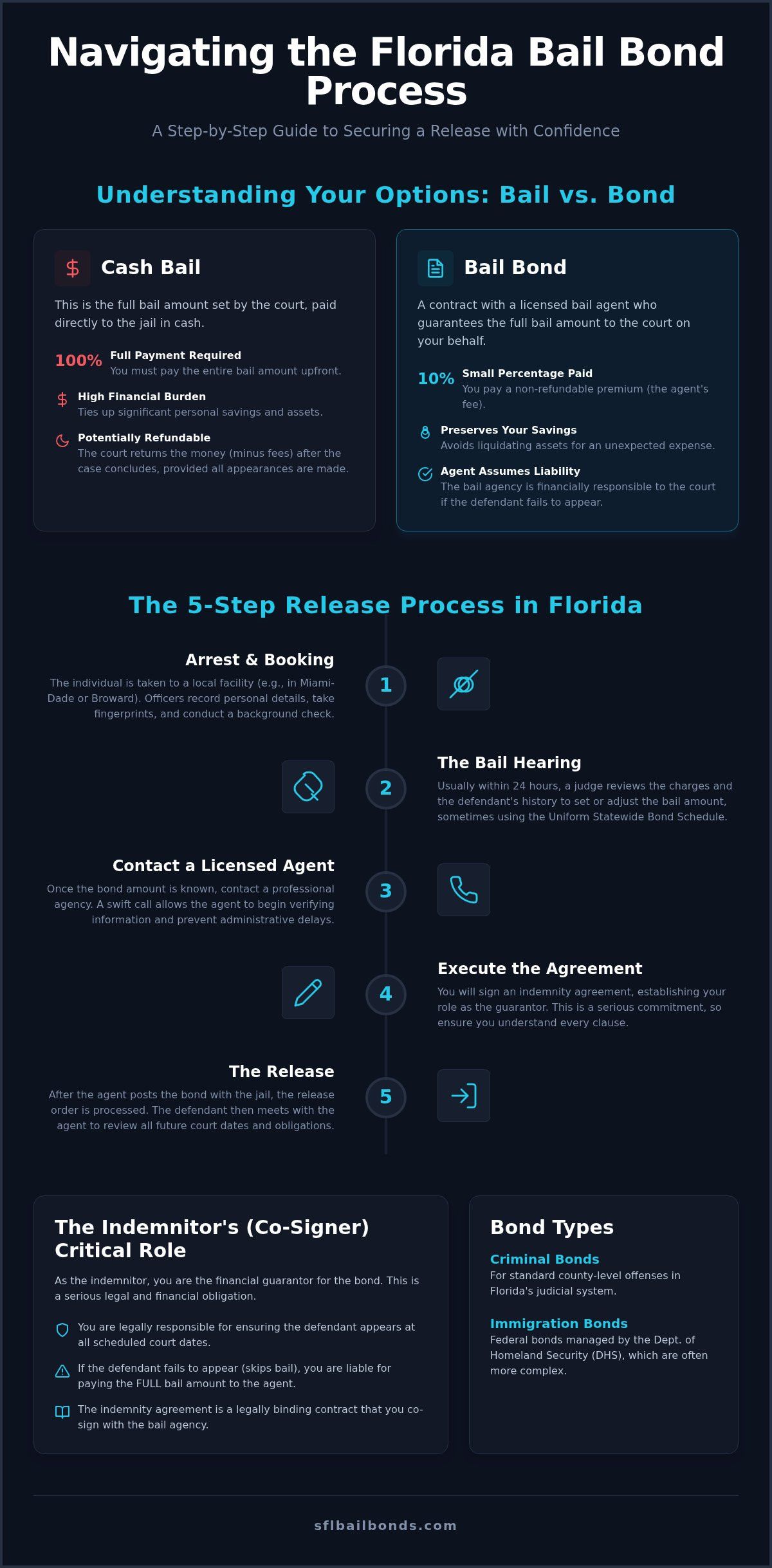
  • When you're trying to understand how do bail bonds work, it's helpful to start with the core definition. Bail is a financial guarantee required by the court to ensure a defendant's presence at future hearings. When someone is arrested in Miami-Dade or Broward, the court sets a specific dollar amount that acts as a security deposit for their release. If the defendant pays the full amount directly to the jail, it's known as cash bail. However, many families find this cost prohibitive. This is where a bail bond becomes a vital tool for regaining freedom.

    The historical roots of this system, often referred to as Bail in the United States, are designed to protect the presumption of innocence while maintaining judicial order. A bail bond functions as a legal contract involving three distinct parties: the court, the bail bond agent, and the indemnitor. The agent provides a surety to the court, promising that the full bail amount will be paid if the defendant disappears. You, as the indemnitor, co-sign the bond and take on the financial responsibility for the defendant's court attendance. Because this is a serious financial commitment, the Florida Department of Financial Services strictly regulates these services to ensure consumer protection and ethical conduct.

    Bail vs. Bond: Clearing the Confusion

    Confusing bail with a bond is common during a legal crisis. Bail represents the total dollar figure a judge demands for release. A bond is the legal instrument used to satisfy that requirement without paying the total sum upfront in cash. To use this service, you pay a bail bond premium to the agency. This is a non-refundable service fee. For most families in South Florida, paying the full cash amount to the jail is impractical. The bond system allows you to secure a loved one's release by using the agency's financial standing instead of your own liquid savings.

    The Legal Purpose of the Bond System

    The system exists to balance individual liberty with the community's need for safety. By requiring a financial stake, the court creates a strong incentive for defendants to return for every scheduled appearance. This process helps prevent jail overcrowding in facilities across Ft. Lauderdale and Miami while ensuring the legal process moves forward. Understanding how do bail bonds work helps you see that the system isn't just about money; it's about maintaining the integrity of the judicial process. We act as your mentor during this time, ensuring you understand every obligation while providing the steady support you need to navigate these complex regulations.

  • Blitz Image Placeholder.jpg

    The 5-Step Process of Securing a Release in Florida

    Securing a release from a South Florida facility requires a methodical approach. It's often helpful to view the situation as a series of manageable hurdles rather than one giant obstacle. Understanding how do bail bonds work helps you stay calm while moving through these five critical steps. Our team acts as your mentor, ensuring you're never left wondering what happens next.

    Step 1: Arrest and Booking. Immediately following an arrest, the individual is taken to a local facility in Miami-Dade or Broward. Officers record personal details, take fingerprints, and conduct a warrant check. This phase is mandatory. It ensures the court has an accurate record of who is in custody.

    Step 2: The Bail Hearing. Under the 2026 Uniform Statewide Bond Schedule, many non-violent offenses have pre-set amounts. However, a first appearance hearing usually occurs within 24 hours. A judge reviews the charges and may adjust the bond based on the defendant's history. As noted by the UW School of Law, this judicial oversight balances public safety with the constitutional right to a fair release process.

    Step 3: Contacting a Licensed Agent. Speed is your greatest ally. Once you know the bond amount, you should contact a professional agency. We begin verifying the jail's information immediately to prevent administrative delays. For those facing this crisis right now, our team provides Florida bail bonds with the compassion and speed you deserve.

    Step 4: Executing the Agreement. You'll sign an indemnity agreement and provide any required collateral. This contract establishes your role as the guarantor. It's a serious commitment, but we'll walk you through every line to ensure you feel confident in your decision.

    Step 5: The Release. After we post the bond, the jail processes the release order. The defendant must then meet with us to review their court dates and check-in requirements. This ensures everyone is on the same page regarding future legal obligations.

    What Happens During the Booking Phase?

    Booking is often the most frustrating part of the process because it's entirely out of your hands. Staff must photograph the defendant and check for any outstanding warrants across different jurisdictions. In busy Miami hubs, this can take several hours depending on the jail's current volume. You shouldn't wait for booking to finish before calling us. Contacting an agent early allows us to prepare the paperwork so we're ready the moment the jail is. It's a proactive way to reduce the total time your loved one spends behind bars.

    The Role of the Bail Bond Agent

    A professional agent does more than just fill out forms. We act as a liaison between your family and the court system. We verify the exact charges and bond amounts with the jail clerk to ensure no errors slow down the release. Our team explains the non-refundable premium and the responsibilities of the indemnity agreement in plain English. Finally, we physically or electronically post the bond at the jail. This action triggers the official release order. We take pride in being more than just a service; we're your partner in navigating this transition.

    Blitz Image Placeholder.jpg

    Comparing Criminal Bonds and Immigration Bonds

  • In South Florida, a legal crisis might involve local police or federal agents. If your loved one is in a county jail like Miami-Dade or Palm Beach, you're looking at a standard criminal bond. These are governed by Florida's bail bond regulations and typically move faster than federal cases. However, if the arrest involves U.S. Immigration and Customs Enforcement (ICE), the process changes entirely. Understanding how do bail bonds work in the federal system requires a shift in perspective. These are administrative matters handled by the Department of Homeland Security rather than the local clerk of court.

    The release process for immigration bail is often more complex. While criminal bonds focus on local court dates, immigration bonds ensure the defendant complies with federal deportation or residency hearings. This distinction often means different collateral requirements and significantly different paperwork. You need a partner who can navigate both the local county rules and the rigid federal protocols to ensure a smooth transition from custody back to the family.

    The Nuances of ICE Detention in Florida

    Immigration bonds aren't one-size-fits-all. A Delivery Bond is the most common type. It allows a person to be released while they await their court proceedings. In contrast, a Voluntary Departure Bond allows someone to leave the country on their own terms within a set timeframe. You should be prepared for longer wait times. Federal release times are notorious for being slower than county releases. While a Miami jail might process a bond in hours, federal facilities often take much longer due to the layered administrative checks required by ICE.

    Why Specialist Knowledge Matters

    Navigating facilities like the Krome Detention Center requires more than just a standard license. It requires an ally who understands the specific rhythms of federal bureaucracy. Families often ask how do bail bonds work when a person is transferred from a local jail to federal custody. This transition is a high-stress moment that requires immediate, specialized action. Our background as a bail bond education center gives us a unique edge in managing this complex federal paperwork. We ensure you aren't just filing forms; you're following a strategic path toward release. This includes ensuring the defendant understands their unique check-in requirements with ICE to avoid a bond forfeiture. Whether you need standard Florida bail bonds or specialized federal assistance, having a mentor who bridges both worlds is essential for your peace of mind.

  • infographic (1).jpg
    Blitz Image Placeholder.jpg

    The Responsibilities of the Indemnitor (Co-Signer)

    Becoming an indemnitor is a profound act of support for a loved one. You're stepping up as a guarantor for their freedom while they navigate the legal system. While the emotional weight of this decision is high, the legal weight is equally significant. An indemnitor is the person who contractually ensures the defendant will appear for every scheduled court date in Miami-Dade, Broward, or Palm Beach counties. If you're wondering how do bail bonds work from a liability standpoint, it's simple but serious. You're promising the court that if the defendant fails to appear, you'll be responsible for the full amount of the bail. This doesn't have to be a source of constant anxiety. With a professional partner, you can manage this risk effectively.

    Collateral is another key part of this equation. Depending on the size of the bond and the nature of the charges, an agency might require physical assets to secure the agreement. This could include vehicle titles, real estate, or liquid assets. It's important to remember that collateral is held as a security deposit. Once the case is resolved and the bond is exonerated, these assets are returned to you. Our team works diligently to ensure you understand exactly when and how your property is protected throughout the process. We believe in transparency and partnership, ensuring you feel seen and supported rather than just processed.

    Your Legal Obligations as a Co-Signer

    Your role goes beyond just signing a form. You're an active participant in the defendant's legal journey. This means ensuring they attend every hearing in Miami or Ft. Lauderdale without fail. You're also responsible for keeping the bond agency updated on any changes to the defendant’s address or employment status. If you ever feel the defendant has become a flight risk, you have the legal power to surrender the bond. This action returns the defendant to custody and releases you from future financial liability. It's a difficult choice, but it's a necessary tool for your own protection. We provide the non-judgmental guidance you need to make these tough calls if they ever become necessary.

    Managing Risks and Expectations

    Choosing to co-sign is a decision that requires careful thought. You should only co-sign for someone you trust implicitly to follow the court's rules. Once the legal proceedings are finished, the court issues an "Exoneration of Bond." This officially ends your financial obligation to the court. However, you must remember that the premium paid to the agency is a non-refundable service fee. This fee covers the professional labor and the financial risk the agency takes on your behalf. It's how do bail bonds work as a business model, ensuring agents can continue providing 24/7 support to families in crisis. If you're ready to take this step and need a mentor to guide you, our team provides the expert Florida bail bonds support you need to move forward with confidence.

    Choosing a Licensed and Professional Bail Agent

    Choosing the right bail agent is the most critical decision you'll make in the hours following an arrest. This professional isn't just a service provider; they are your primary guide through a complex and often intimidating legal landscape. If you're still feeling uncertain about how do bail bonds work, the quality of your agent will determine whether you feel like a number or a valued partner. In Florida, this industry is strictly regulated to protect you, but not every agency brings the same level of depth to the table. You deserve an ally who combines local expertise in Miami-Dade and Broward jails with a deep, instructional understanding of the law.

    Why Education and Licensing Matter

    Every legitimate agent in Florida must be licensed through the Florida Department of Financial Services. This ensures they adhere to ethical standards and understand current regulations, such as the 2026 updates in SB 600. This law requires agencies to maintain a physical office and use liquid financial instruments for sureties, moving the industry toward higher professional standards. We believe that an agent's knowledge should go beyond the bare minimum. Because we operate a state-approved center for a pre-licensing bail bonds class and continuing education, we stay at the forefront of legislative changes. An agent who teaches the law is naturally better equipped to explain how do bail bonds work to a family in crisis. This mentor-like approach ensures you receive accurate, current information during a time when rumors and misinformation are common.

    Next Steps: Securing Immediate Help

    When you're ready to start the process, having specific information ready will speed up the release. You should gather the defendant’s full legal name, their date of birth, and the specific facility where they are being held. Whether they are in a North Miami jail or a federal detention center, this data allows us to act immediately. We understand the emotional weight of this moment. Our team provides a calming, non-judgmental environment where your questions are answered with patience and professional authority. For those in immediate need, you can contact Optimal Bail Bonds for professional, compassionate guidance. We'll help you manage the financial obligations and the logistical hurdles so you can focus on bringing your loved one home.

    Frequently Asked Questions

    Is the bail bond premium refundable after the case ends?
    The bail bond premium is non-refundable once the defendant is released from custody. This fee represents the payment for the professional services and the financial risk the agency takes on your behalf. Even if the charges are dropped the next day or the defendant is found innocent, the premium cannot be returned. It's the cost of securing immediate freedom while you learn how do bail bonds work as a financial tool.
    Can I post a bail bond for someone in a different Florida county?
    You can post a bail bond for someone in any Florida county through a process called a transfer bond. We handle the paperwork locally and coordinate with an agent in the county where the arrest occurred. This allows you to work with a trusted professional in your own community while securing a release in a distant jail. It's a common way to manage the logistics of an arrest that happens away from home.
    What happens if the defendant misses their court date in Miami?
    If a defendant misses their court date in Miami, the court will likely issue a bench warrant and forfeit the bond. As the indemnitor, you'll become financially liable for the full bail amount. We work closely with you to locate the defendant and return them to the court's jurisdiction as quickly as possible. This proactive approach can sometimes help reinstate the bond and avoid the total loss of your collateral or savings.
    How long does it take to get someone out of jail after the bond is posted?
    Release times vary significantly between facilities and can range from a few hours to over 24 hours. Once we post the bond, the jail staff must process the release order and clear the individual through their internal system. Factors like jail volume or administrative shifts can impact the speed of this process. We stay in contact with the jail clerk to monitor the status and keep you informed while your loved one waits for exit.
    Do I need to provide collateral for every bail bond?
    Collateral is not required for every bail bond and depends on several risk factors. We evaluate the defendant's ties to the community, the severity of the charges, and their prior court history. In many cases, a signature bond is sufficient, where the indemnitor’s credit and reputation act as the guarantee. If the bond amount is high or the risk is greater, we'll discuss using assets like real estate or vehicle titles as security.
    What is the difference between a surety bond and a cash bond?
    A cash bond requires you to pay the full bail amount directly to the court, while a surety bond is secured through an agency. When you choose a surety bond, you only pay a small percentage of the total bail as a premium. The agency then provides the court with a financial guarantee for the remainder. This is a primary reason why people ask how do bail bonds work; they provide an affordable alternative to tying up thousands in cash.
    Can a bail bond agent help with immigration detention in Florida?
    A bail bond agent can assist with immigration detention only if they hold the specialized knowledge required for federal bonds. Immigration cases are handled by ICE and the Department of Homeland Security rather than local Florida courts. We specialize in these complex federal matters, helping families navigate the Krome Detention Center and other facilities. Our expertise ensures that the layered administrative requirements of the federal system are met with professional diligence and accuracy.
    What documents do I need to bring to the bail bond office?
    You'll need to provide a valid government issued photo ID and proof of residency to begin the process. We also typically require recent pay stubs or other proof of income to verify your ability to act as an indemnitor. Having the defendant's full name, date of birth, and booking number is also essential. These documents help us quickly establish the indemnity agreement and move forward with the release process in Miami-Dade or Broward.

    Moving Forward with Confidence and Clarity

    Facing a legal crisis is overwhelming, but you now have the tools to navigate the Florida system with precision. We've explored the essential five-step release process and clarified the critical differences between county criminal bonds and federal immigration matters. Understanding how do bail bonds work transforms a chaotic situation into a manageable series of steps, allowing you to protect your family's future and finances. As a state-approved bail bond education provider and specialists in both criminal and immigration bonds, we bring a unique depth of expertise to every case we handle. We proudly serve families across Miami, Ft. Lauderdale, and West Palm Beach with the diligence and empathy you deserve.

    You don't have to face the complexities of the Florida Department of Financial Services regulations alone. Our team is here to act as your protective ally and knowledgeable guide, ensuring your loved one returns home as quickly as possible. Get Compassionate Bail Bond Help in South Florida Now. You have the knowledge and the professional support needed to see this through to a positive resolution. We're ready to stand by your side until the final court date is behind you.